

Commercial Buildings Industry
68% of rated buildings about to lose a NABERS star. Gas bans rolling in. And you can’t find a technician to fix the BMS.
Australian commercial buildings are being hit from every direction — forced electrification, mandatory climate reporting, tenants demanding better air and smarter spaces, and a trades workforce that’s disappeared. We help you fix the operating systems behind your buildings so you can protect asset value and stay ahead of regulation.
68%
Of NABERS-rated buildings face star downgrades
Knight Frank
40–50%
Of building energy wasted through HVAC alone
DCCEEW
43%
Of trades roles going unfilled nationally
Jobs & Skills Australia
20%+
Vacancy in B/C-grade buildings without upgrades
CBRE
Sound familiar?
If you’re managing a commercial building or portfolio in Australia right now, you’re probably nodding at most of these.
Your NABERS rating is about to drop because the gas methodology change hits in July 2025 — and you don’t have an electrification plan
Your BMS is 15 years old, half the sensors are unreliable, and the person who knew the system just retired
HVAC, fire, lighting, and access control all run on different systems that can’t talk to each other
Essential Safety Measures inspections keep finding issues, and the penalties for non-compliance are up to $500K
You can’t find HVAC technicians or electricians — 43% of trades roles go unfilled and the apprenticeship pipeline has collapsed
Mandatory climate reporting started January 2025 and you’re still collecting energy data from spreadsheets
Tenants want air quality data, smart controls, and sustainability credentials — and they’ll move to a building that has them
ESM compliance, NABERS reporting, DDA audits, WHS obligations, climate disclosures — the regulatory load keeps growing
It’s not the building. It’s how it’s operated.
Most commercial buildings have invested in plant, equipment, and some level of automation. But the systems connecting them — how energy is monitored, how maintenance is scheduled, how compliance is tracked, how tenant comfort is managed — are held together with legacy BMS, disconnected spreadsheets, and tribal knowledge. When your HVAC, fire, lighting, access, and energy systems can’t talk to each other, you’re wasting energy, missing compliance deadlines, and losing tenants to buildings that have their act together. The technology to fix this exists. But most building upgrades fail because nobody changes how the operation actually works around the new systems. That’s the gap we close.
Stop bleeding energy and start protecting your rating
Stop bleeding energy and start protecting your rating
HVAC alone wastes 40–50% of a commercial building’s energy. With electricity prices rising 5–10% from mid-2025 and 68% of NABERS-rated buildings facing star downgrades under the new gas methodology, the cost of doing nothing is measurable — in dollars, in ratings, and in tenant appeal.
NABERS stars about to drop
The July 2025 NABERS methodology change penalises gas-dependent buildings. Gas-reliant buildings will lose approximately 0.5 stars immediately, and a full star by 2030. Every star lost hits asset value and leasing competitiveness.
Energy waste you can’t see
Without proper fault detection, HVAC systems run inefficiently for months or years before anyone notices. Modern BMS analytics and energy monitoring cut energy use 10–30% — with ROI inside 18 months.
Electrification is no longer optional
Gas bans are rolling in — Sydney from 2026, Victoria from 2027, ACT already passed. Green Star v1.1 mandates all-electric from May 2026. Your gas-fired boilers and heating have an expiry date.
Energy performance · Before
Your building wastes energy through outdated HVAC schedules, faulty sensors, and systems nobody has tuned in years. You find out when the NABERS rating drops.
Energy performance · After
Continuous monitoring, automated fault detection, and optimised schedules. Energy use drops 10–30%. Your rating improves or holds — and you can prove it.
Electrification planning · Before
You know gas is being phased out but don’t have a plan. The cost feels overwhelming and you don’t know where to start.
Electrification planning · After
A staged electrification roadmap that fits your capital cycle. Heat pumps, electric boilers, and controls upgrade sequenced to minimise disruption and maximise rebates.
NABERS pathway · Before
Your rating is at risk and you’re not sure what it takes to hold or improve it under the new methodology.
NABERS pathway · After
Clear interventions mapped to star improvements. You know exactly what each upgrade delivers and can make investment decisions with confidence.

Stay on top of compliance before it buries you
Stay on top of compliance before it buries you
Essential Safety Measures, mandatory climate disclosures, NABERS reporting, DDA audits, WHS obligations — the compliance load on Australian building operators has never been heavier. Penalties for ESM non-compliance alone reach $500K for corporations. And mandatory climate reporting started January 2025.
ESM compliance is a constant scramble
Quarterly and annual inspections for fire systems, exits, lighting, and structural elements. Most buildings track this in spreadsheets or paper logs. Miss one, and you’re exposed to penalties and voided insurance.
Climate reporting has arrived
Mandatory climate-related financial disclosures commenced January 2025 for the largest entities, with Group 2 and 3 following in 2026–27. This means collecting Scope 1, 2, and 3 emissions data across every building — a massive data challenge.
Regulation keeps expanding
The Commercial Building Disclosure program is extending beyond offices to hotels by 2030. Updated DDA standards took effect in late 2024. Each new obligation adds reporting burden to teams already stretched thin.
ESM management · Before
You track Essential Safety Measures in spreadsheets. Inspections are booked manually. Defects get lost between emails. You’re never quite sure you’re fully compliant.
ESM management · After
Digital ESM platform with automated scheduling, defect tracking, and audit-ready reporting. You know exactly where every building stands, every quarter.
Climate and ESG reporting · Before
Collecting energy, water, and emissions data across a portfolio is a months-long manual exercise. Numbers don’t reconcile and you’re not confident in what you’re submitting.
Climate and ESG reporting · After
Automated data collection from BMS and metering feeds directly into reporting frameworks. Submissions are faster, accurate, and auditable.
Regulatory readiness · Before
Each new regulation catches you off guard. You scramble to understand the impact and comply by the deadline.
Regulatory readiness · After
A compliance roadmap that maps upcoming obligations to your portfolio. You plan ahead, budget accordingly, and never scramble.

Get more from your maintenance team
Get more from your maintenance team — because you can’t hire more
43% of trades roles go unfilled. Apprenticeship commencements have dropped 52% from their peak. The technicians who know your BMS and plant are retiring. You can’t hire your way out of this — you need to get more from every person and every dollar you’ve got.
The technician who knew everything just left
Your most experienced BMS engineer or HVAC tech knew every quirk in the building. Their knowledge lived in their head, not in any system. Now they’re gone and the new person is guessing.
Reactive maintenance eating your budget
Emergency callouts for HVAC failures, lift breakdowns, and fire system faults cost 4–5x more than planned work. Every reactive job displaces preventive maintenance, and the backlog grows.
Contractors with no visibility
You rely on multiple specialist contractors — HVAC, fire, lifts, electrical — but have no single view of what’s been done, what’s due, or what’s been missed. You manage by inbox, not by system.
Knowledge retention · Before
Critical building knowledge lives in the heads of long-serving technicians. When they leave, you lose decades of context.
Knowledge retention · After
Digital asset records, standardised procedures, and maintenance histories captured in the system. New technicians get productive faster because the building’s story is documented.
Maintenance approach · Before
You fix things when they break. Planned maintenance keeps getting bumped by emergencies. The deferred maintenance backlog grows every quarter.
Maintenance approach · After
Condition monitoring and fault detection catch problems early. Maintenance shifts from reactive to planned. Fewer emergency callouts, lower costs, longer asset life.
Contractor coordination · Before
Each contractor manages their own schedule and reporting. You don’t know if last quarter’s fire inspection was actually completed until someone chases it.
Contractor coordination · After
One platform tracking all contractor work, compliance inspections, and defect resolution. Nothing falls through the cracks.
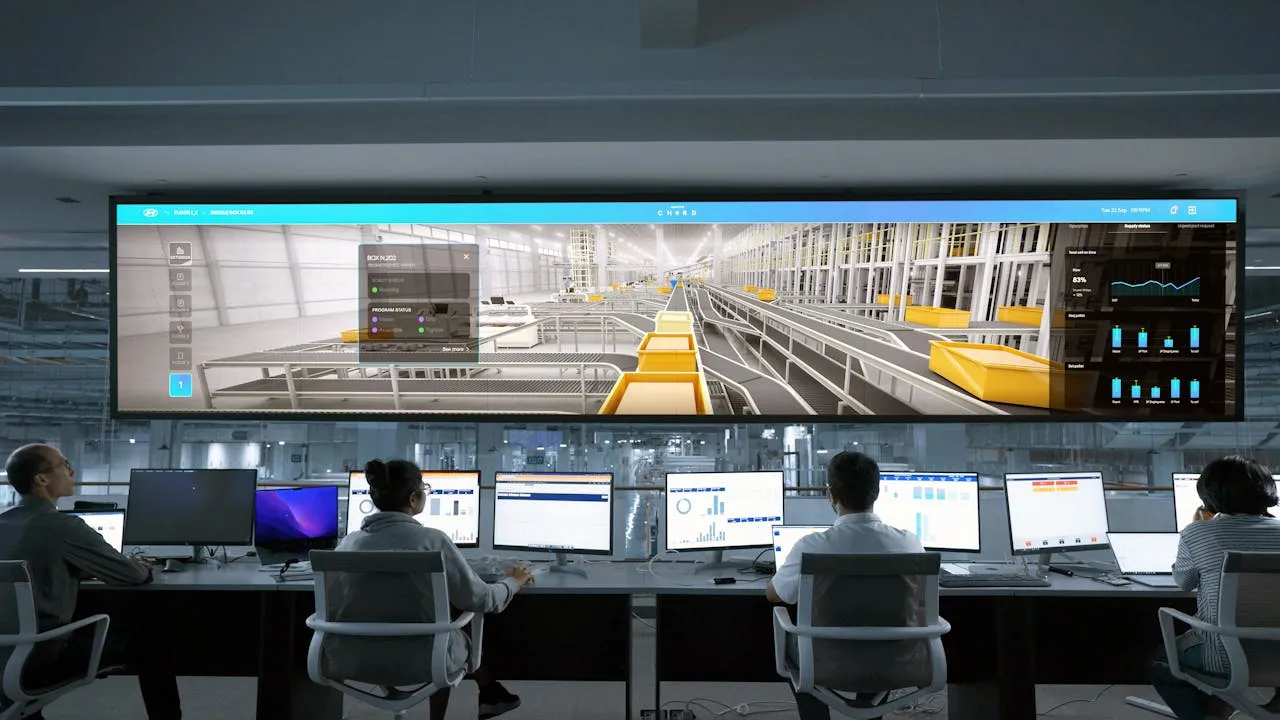
Give tenants a reason to stay
Give tenants a reason to stay — and a reason to choose you
A two-tier market is emerging. Prime buildings with strong sustainability credentials and smart amenities attract tenants at premium rents. B and C-grade buildings without upgrades face 20%+ vacancy. Indoor air quality, smart controls, and ESG credentials are now lease-renewal factors, not nice-to-haves.
Tenants leaving for better buildings
Tenants with requirements over 1,000 sqm increasingly target new developments with premium amenities and sustainability credentials. If your building can’t compete, they’ll move to one that can.
Air quality is now a brand issue
Post-COVID, tenants expect measurable proof of good ventilation and filtration. Buildings that demonstrate air quality metrics attract tenants faster and retain them longer.
No smart building capability
Tenants want app-based controls, real-time comfort feedback, meeting room booking, and visitor management. Most existing buildings have none of this — because the underlying BMS can’t support it.
Tenant experience · Before
Comfort complaints come via email. Temperature issues take days to resolve. Tenants feel ignored and start looking elsewhere.
Tenant experience · After
Real-time comfort monitoring, rapid fault response, and tenant-facing dashboards. Issues are detected and fixed before tenants complain.
Air quality · Before
You have no data on indoor air quality. You can’t answer tenant questions about ventilation rates or filtration effectiveness.
Air quality · After
Continuous IAQ monitoring with CO2, PM2.5, and VOC sensors. You can prove your building’s air quality and market it as a differentiator.
Building positioning · Before
Your building is losing tenants to newer, greener, smarter competitors. You’re in a race to the bottom on rent.
Building positioning · After
Targeted upgrades in energy performance, air quality, and smart amenities reposition your building to compete. You attract quality tenants at better rents.
The numbers don't lie
These aren’t projections. They’re documented results from building operators who’ve made the shift.
10–30%
Energy savings from BMS analytics and fault detection
DCCEEW / Industry
0.5–1 star
NABERS rating at risk for gas-dependent buildings
Knight Frank
<18 mths
Typical ROI on energy monitoring and BMS upgrades
Industry benchmark
$500K+
Maximum penalty for ESM non-compliance (corporations)
VBA
20–40%
Longer asset life with condition-based maintenance
Industry benchmark
70%
Of building technology projects fail without proper implementation
Industry benchmark
What working with us looks like
We don't hand you a report and walk away. We work alongside you to change how your business runs.
Step 1
We learn your building
We spend time with your facility team, your BMS, your plant rooms, and your data. We look at how energy flows, how maintenance gets done, how compliance gets tracked — and where the gaps are costing you stars, money, and tenants.
Step 2
We show you the picture
You get a clear, straight-talking view of where your building or portfolio is strong and where it’s bleeding energy, compliance risk, and tenant satisfaction. No jargon. Just an honest assessment with real numbers.
Step 3
We build the fix — with you
We set up the right systems and processes for your building’s age, type, and tenant base. We make sure your team and contractors actually use them. We stay until the new way of working sticks.
Step 4
You run it from here
The goal is a building that runs properly without us. Better energy performance, fewer compliance surprises, happier tenants. You manage by dashboard, not by reactive callouts.
Let’s talk about what’s actually costing your building
No consultancy theatre. No 200-slide decks. We’ll spend time in your building — in the plant rooms, at the BMS, with your facility team. You’ll get a clear, honest picture of where your building is bleeding energy, compliance risk, and tenant appeal, and a practical plan to fix it. 30 minutes. No pitch. Just a straight conversation.
Book a Conversationinfo@xpeditepartners.com.au